Thoughts on Outlining
Plotter, pantser, plantser, or something else?

I’ve been working like crazy to meet presentation deadlines, release books, and improve my author sales that I’ve barely had time to write. Luckily, planning is my strong suit, and I’m getting excited to start a brand-new project. I’m trying my hand at another novel for the first time in several years. I love short stories, but it’s time for something longer.
The vibe in the writing community is often plotter vs. pantser, meaning the plotter outlines and plans and the pantser flies by the seat of their pants. Plantser has also come into fashion—a mixture between plotting and pantsing. But I have also seen authors reject these notions out of hand and tell writers to do whatever works for them without being boxed in. For example, good pantsers know the concepts of story and structure, so they’re essentially writing their outline as the whole book. My friend Amanda Flower, author of cozy and historical mysteries, writes her books this way, and it’s clearly worked for her.
That said, this is how I do things—and it may or may not work for you!
I start with Scrivener. This program uses virtual “note cards” to help plan the story. It has many other features, but I always start with the cards for plotting. You can do this with physical index cards too. I arrange my note cards using a plan that I’ve mixed between K.M. Weiland’s story structure and the Save the Cat! outline. Weiland is the queen of teaching writing—I highly recommend all her books. Save the Cat! has been around for a while, starting out in screenwriting, and is a robust skeleton for a satisfying story.
First, I decide how long the book should be. Then I cut the word count into four parts. Act I needs to contain the setup—inciting incident, complications, call to action, followed by the denial of the call. You can see more information about these pieces in the links above. At the end of Act I, the protagonist moves fully into the world of the story itself. There is no turning back.
Not everyone does this, but I split Act II into two parts. The first part of Act II is leading up into the midpoint. I need to make sure I include what Weiland calls the “first pinch point,” which is an obstacle happening around the 35% mark. The midpoint splits the two parts of Act II. The midpoint is a strong, clear turning point, usually a false victory or a false defeat, and forces the protagonist to take a look at themself and what they are doing. The second half of Act II sees the bad guys closing in, as it’s described in Save the Cat!, and eventually the darkness takes hold. The protagonist cannot win.
Act III shows how the protagonist does win—at least in most stories. There is also a “downfall” arc, which can be seen in The Godfather, but I’m too much of a softie to explore a concept that dark. Act III shows the main character getting back up, assembling their team to defeat the bad guys, and entering a five-part climax. By the end, there is a denouement and wrap-up.
Within the four parts, I cut that word count further into chapters, so then I know exactly how many words I have in each.
Then I start brainstorming what might happen in each chapter. I learn more about the protagonist as I go, creating complications and dynamics with characters. Here’s where my “plantsing” comes in—I don’t always know what my characters will do in a particular scene or chapter, so I have to move scenes around or edit events that I’ve already written or am planning. I like to use Weiland’s techniques to help me plot the arc of the character as it goes along with the story.
The cool thing about planning is that it can take you wherever you want to go. Whether you’re making it up as you go along or writing every index card out before you start, an outline helps you create a world your readers can get lost in and a story they’ll be ultimately satisfied with.
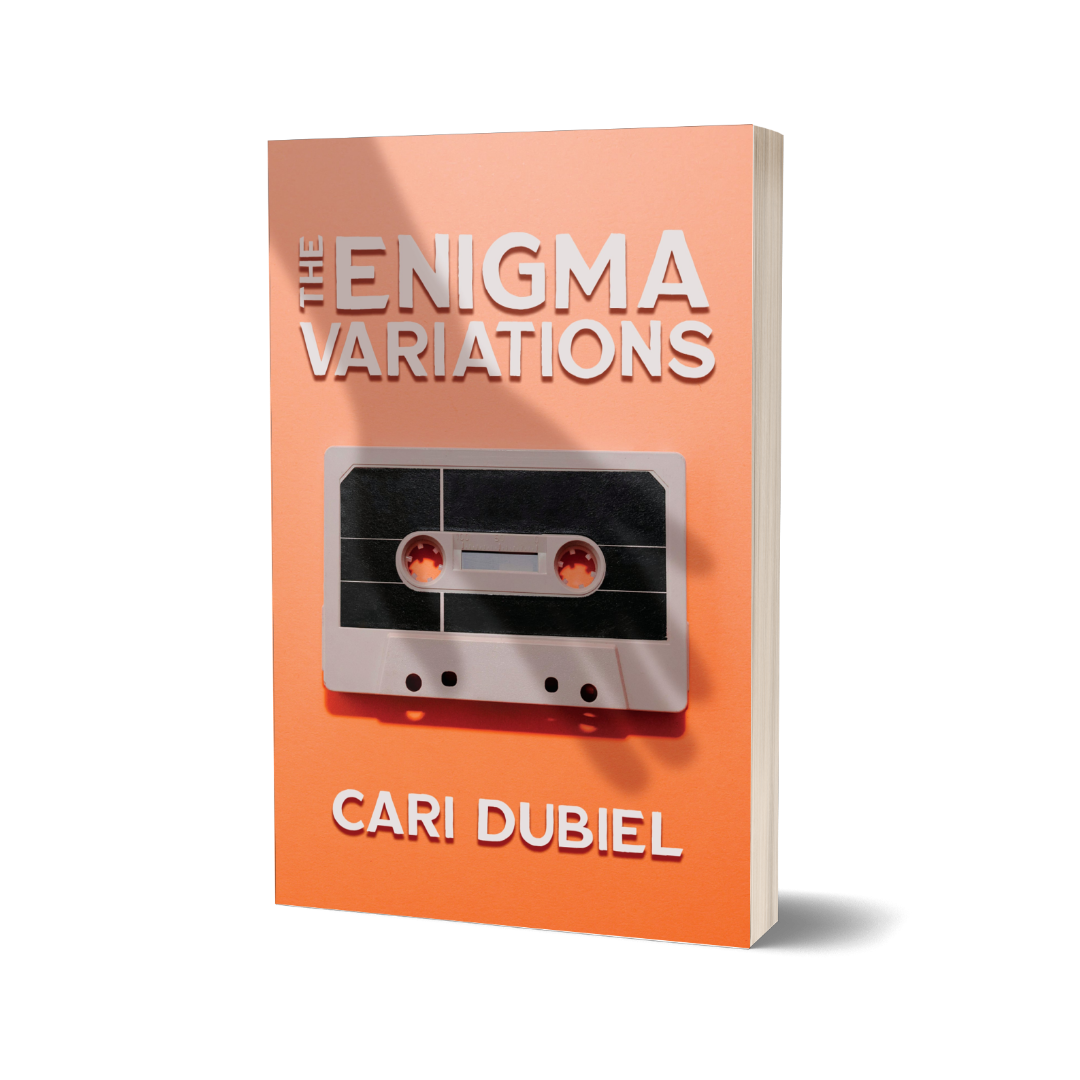
My newest book is The Enigma Variations, plotted with this framing! Get a signed copy at my website here.